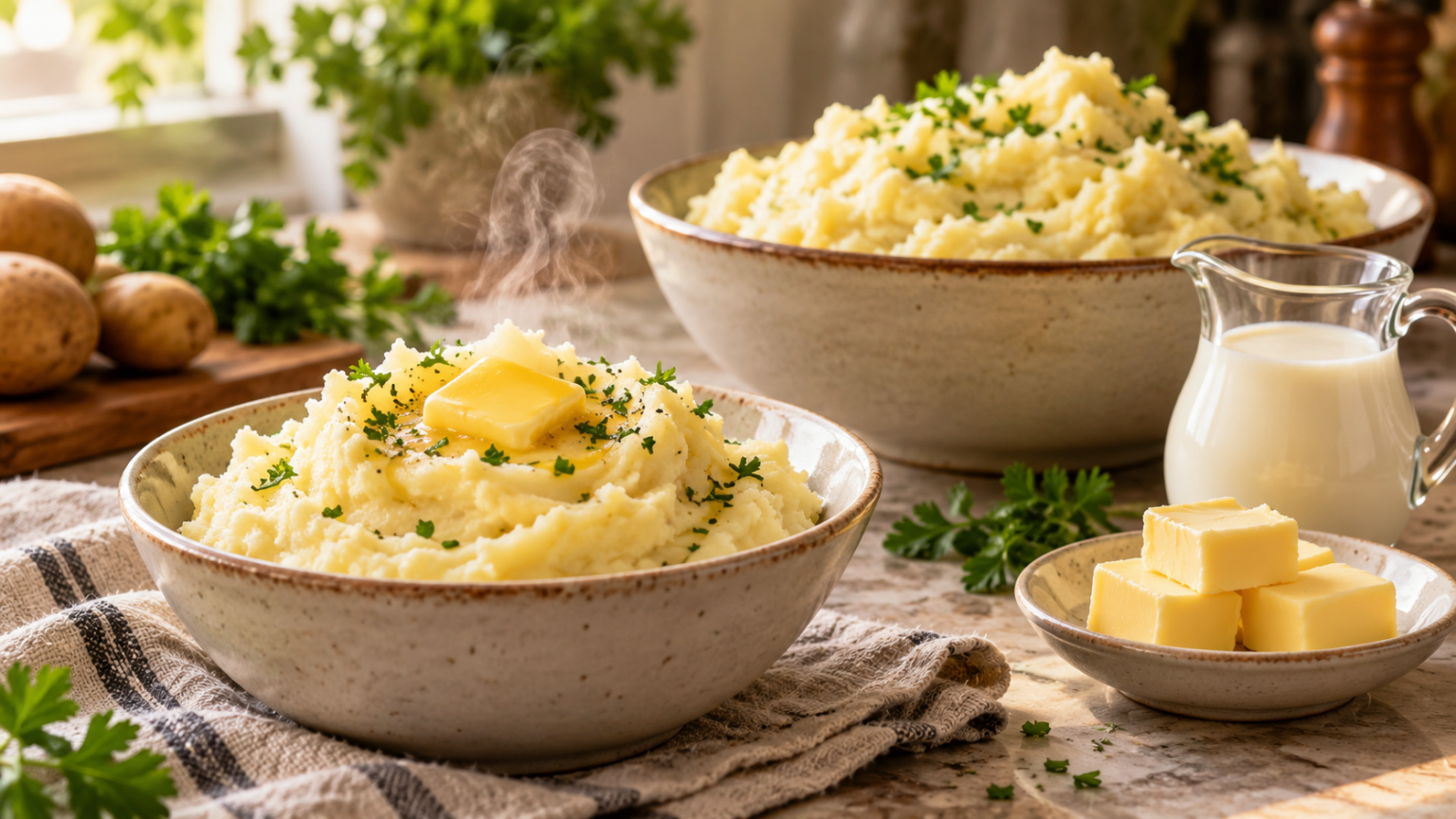
No, mashed potato is not fattening by itself. A cup of potatoes mashed with nothing added has about 175 calories and less than 1 gram of fat, according to USDA FoodData Central. The calories come from what goes in with the potatoes. Butter, heavy cream, cheese and sour cream can more than double a serving. So can a restaurant scoop that’s twice the size of a standard portion. Weight gain depends on your total calories over weeks and months, not on one side dish.
Below you’ll find a calorie table for different recipes, what the research says about potatoes and weight, and how to make mash lighter without it tasting like a diet food.
Is mashed potato fattening?
- Plain mash (boiled potatoes, mashed with a little cooking water or broth): about 175 calories per cup.
- Classic home mash (whole milk and butter, the USDA standard recipe): about 237 calories and 9 g of fat per cup.
- Holiday-style mash (heavy cream and plenty of butter): roughly 400 to 450 calories and about 28 g of fat per cup.
Same potato, but the calories can be 2.5 times higher. That gap is the real answer to whether mashed potatoes are fattening.
What it means: why potatoes get a bad reputation
Starch and the glycemic index
Potatoes are mostly starch, and mashing them makes that starch quick to digest. On the glycemic index list published by Harvard Health, instant mashed potato scores about 87 and boiled white potato about 78, compared with roughly 73 for boiled white rice. In practice, a plate of mash alone raises blood sugar faster than many other carbohydrates.
Large observational studies also link potatoes to weight gain. A Harvard analysis of more than 120,000 adults, published in the New England Journal of Medicine, found that each extra daily serving of potatoes was associated with about 1.3 pounds of weight gain every four years. French fries were linked to about 3.4 pounds. That study shows an association, not proof that potatoes cause weight gain, and it couldn’t separate the potato from the butter, salt and frying that usually come with it.
What a potato actually gives you
A medium baked potato eaten with the skin has about 160 calories, around 900 mg of potassium (more than a medium banana), about 17 mg of vitamin C, a good share of your daily vitamin B6 and close to 4 g of fibre. Peeling and mashing cuts the fibre, but the potassium and B6 mostly stay.
Potatoes are also unusually filling. In a well-known 1995 satiety study in the European Journal of Clinical Nutrition, boiled potatoes ranked as the most filling of 38 common foods, calorie for calorie. That’s a real advantage if you’re managing your weight, provided you don’t drown them in fat.
Key facts and context: mashed potato calories by preparation
Figures are approximate per 1-cup serving, based on USDA FoodData Central values for the potatoes and each added ingredient. Your recipe will vary.
| Preparation | Calories (1 cup) | Fat | Notes |
|---|---|---|---|
| Plain (potato plus cooking water or broth) | ~175 | <1 g | Baseline |
| Whole milk only | ~175 | ~1 g | Milk adds creaminess, not many calories |
| Whole milk and butter (USDA recipe) | ~237 | ~9 g | Typical weeknight mash |
| Lighter mash (skin-on, broth, Greek yogurt, olive oil) | ~200–225 | ~4 g | Recipe below |
| Instant flakes, made per box with milk and butter | ~200–240 | ~7–9 g | Often higher in sodium |
| Heavy cream and butter (holiday-style) | ~400–450 | ~28 g | Based on 2 lb potatoes, ½ cup cream, 6 tbsp butter |
| Loaded (cheese, sour cream, bacon) | ~450–550 | ~30+ g | Toppings add up fast |
| Half potato, half cauliflower | ~130–150 | ~4 g | A good compromise on taste |
| All-cauliflower mash, a little butter | ~80 | ~6 g | Different texture, much less starch |
Where the extra calories come from
- Butter: about 102 calories and 11.5 g of fat per tablespoon.
- Heavy cream: about 51 calories per tablespoon, or roughly 400 per half cup.
- Shredded cheddar: about 115 calories per ¼ cup.
- Full-fat sour cream: about 57 calories per 2 tablespoons.
- Gravy: usually 25 to 60 calories per ¼ cup, and often a lot of sodium.
Portion size matters more than you think
Nutrition labels and dietitians usually count ½ cup as a serving, which is about the size of a computer mouse. Steakhouse and holiday scoops are often 1 to 1½ cups. A large scoop of cream-and-butter mash with gravy can reach 600 to 700 calories, more than many entrées. Chain restaurants publish nutrition information, so check before you order. We did the same for fast food in our breakdown of Jack in the Box mini tacos calories.
Examples or use cases: mashed potato vs. the alternatives
- French fries: a medium fast-food order is about 320 to 380 calories, roughly 1.5 times a cup of classic home mash. Frying adds the fat, and the NEJM data linked fries most strongly to weight gain.
- Baked potato with skin: about 160 calories for a medium potato, with more fibre than mash. It’s the leanest potato option until you add toppings.
- White rice: about 205 calories per cooked cup. Pasta: about 200 to 220. Both are similar to classic mash.
- Mashed sweet potato: about 250 calories per cup, with more vitamin A and a lower glycemic index (around 63 when boiled). It isn’t lower in calories.
So mashed potatoes or rice for weight loss? Cup for cup they’re close. What makes the difference is what you add and how much you eat.
A healthy mashed potato recipe that still tastes like mash
- Scrub 2 lb of Yukon Gold potatoes and leave the skins on. Yukon Golds taste buttery without much butter.
- Boil them in salted water until a fork slides in easily, about 15 to 20 minutes. Drain, keeping ½ cup of the cooking water.
- Mash with ½ cup warm low-sodium chicken or vegetable broth, ½ cup plain nonfat Greek yogurt and 1 tablespoon olive oil or butter.
- Add roasted garlic, chives, black pepper or a little Parmesan. Add more cooking water until it’s as smooth as you like.
This makes about 4 cups at roughly 200 to 225 calories each. That’s around half the calories of holiday-style mash, with more protein and fibre.
A balanced holiday plate
Thanksgiving is a month away, so here’s a plate that works: ½ cup of mash, a palm-sized portion of turkey, and half the plate filled with green beans, salad or roasted vegetables. This is the same structure as the CDC’s diabetes plate method, and it works for most adults. You still get the mash. It just isn’t the whole plate.
Common questions about mashed potato and your health
Is mash potato healthy for weight loss?
It can be. Plain or lightly dressed mash is filling for its calories, and weight loss comes down to an ongoing calorie deficit. Keep to ½ to 1 cup, skip the cream and pair it with protein. If you’re also building strength, our guide on how to get toned covers the training side.
Does mashed potato make you fat, or can it help you gain weight?
No single food makes you gain fat. Eating more calories than you burn does. Rich mash makes that easy because it’s dense, soft and quick to eat. For people trying to gain weight, mash made with whole milk, butter and cheese is an easy way to add calories.
Is mashed potato healthy for diabetics?
People with diabetes can include potatoes, but mash has a high glycemic index, so portion size and pairing matter. The CDC’s meal-planning guidance suggests filling a quarter of the plate with carbohydrate foods and eating them with protein and non-starchy vegetables. Leaving the skin on, and cooling and reheating potatoes (which increases resistant starch), may soften the blood-sugar response a little. Ask your doctor or a registered dietitian how mash fits your own plan.
Is it healthy to eat mashed potato every day?
Plain or lighter mash in sensible portions can be part of a daily diet. The USDA eating pattern in the Dietary Guidelines for Americans 2020–2025 includes about 5 cups of starchy vegetables a week at 2,000 calories. That’s roughly ¾ cup a day. Vary your vegetables so potatoes don’t push out the leafy greens and beans.
Is mash potato healthy for dogs?
A spoonful of plain, cooked, unseasoned potato is generally tolerated by healthy dogs. Holiday mash is a different matter. Butter and cream can upset a dog’s stomach, and garlic and onion are toxic to dogs. Never give raw or green potatoes. If your dog has diabetes or is overweight, ask your vet first.
Why is mashed potato good for you?
It provides potassium, which supports healthy blood pressure, plus vitamin C, vitamin B6 and, with the skin on, fibre, all for under 200 calories a cup in its plain form. Harvard’s Nutrition Source makes the same point: the preparation matters more than the potato.
Florida relevance
Florida is one of the country’s main suppliers of spring potatoes, much of them from the Hastings area in northeast Florida, and fresh local potatoes are in stores from about March to June. With holiday potlucks coming up, the most useful habit is serving yourself first with a ½-cup scoop before the gravy goes on. For free, Florida-specific nutrition help, the UF/IFAS Extension Family Nutrition Program and the Florida Department of Health’s county offices offer classes and dietitian referrals. You’ll find more evergreen explainers, such as our look at whether cumin and curcumin are the same thing, in our Health section.
FAQs
How many calories are in a cup of mashed potatoes?
About 175 calories for plain mash, about 237 for the USDA’s standard whole-milk-and-butter recipe, and roughly 400 to 450 for holiday-style mash made with heavy cream and lots of butter. Loaded versions with cheese, sour cream and bacon can go over 500.
Are mashed potatoes healthier than french fries?
Usually, yes. A cup of classic home mash is about 237 calories, while a medium fast-food order of fries is about 320 to 380 and is deep-fried. In a large Harvard study, fries were linked to more than twice as much weight gain over time as other potatoes.
Are mashed potatoes or rice better for weight loss?
Cup for cup they’re similar: about 175 to 237 calories for plain or classic mash, and about 205 for cooked white rice. Potatoes rank as more filling in satiety research, but rice is often eaten with less added fat. Portion size and toppings matter more than which one you choose.
What is the healthiest way to make mashed potatoes?
Leave the skins on, boil the potatoes, then mash them with warm low-sodium broth, plain Greek yogurt and a single tablespoon of olive oil or butter. Season with garlic, herbs and pepper. That’s roughly 200 to 225 calories per cup, about half the calories of cream-and-butter mash.
Are mashed potatoes good for you?
In plain or lighter form, yes. They provide potassium, vitamin C, vitamin B6 and some fibre, and they’re filling for their calories. They become less healthy when heavy cream, butter, cheese and large portions are added, so the recipe matters more than the potato.
This article is general information, not medical advice. If you have diabetes, kidney disease (potatoes are high in potassium) or another health condition, talk with your clinician or a registered dietitian about what’s right for you.