Satellite imagery used to sound like something only governments, defense teams, scientists, and large corporations could use. For years, getting a clear image of a farm, port, construction site, mine, forest, or disaster zone from space often meant dealing with a slow buying process, confusing pricing, technical barriers, and long conversations with multiple providers.
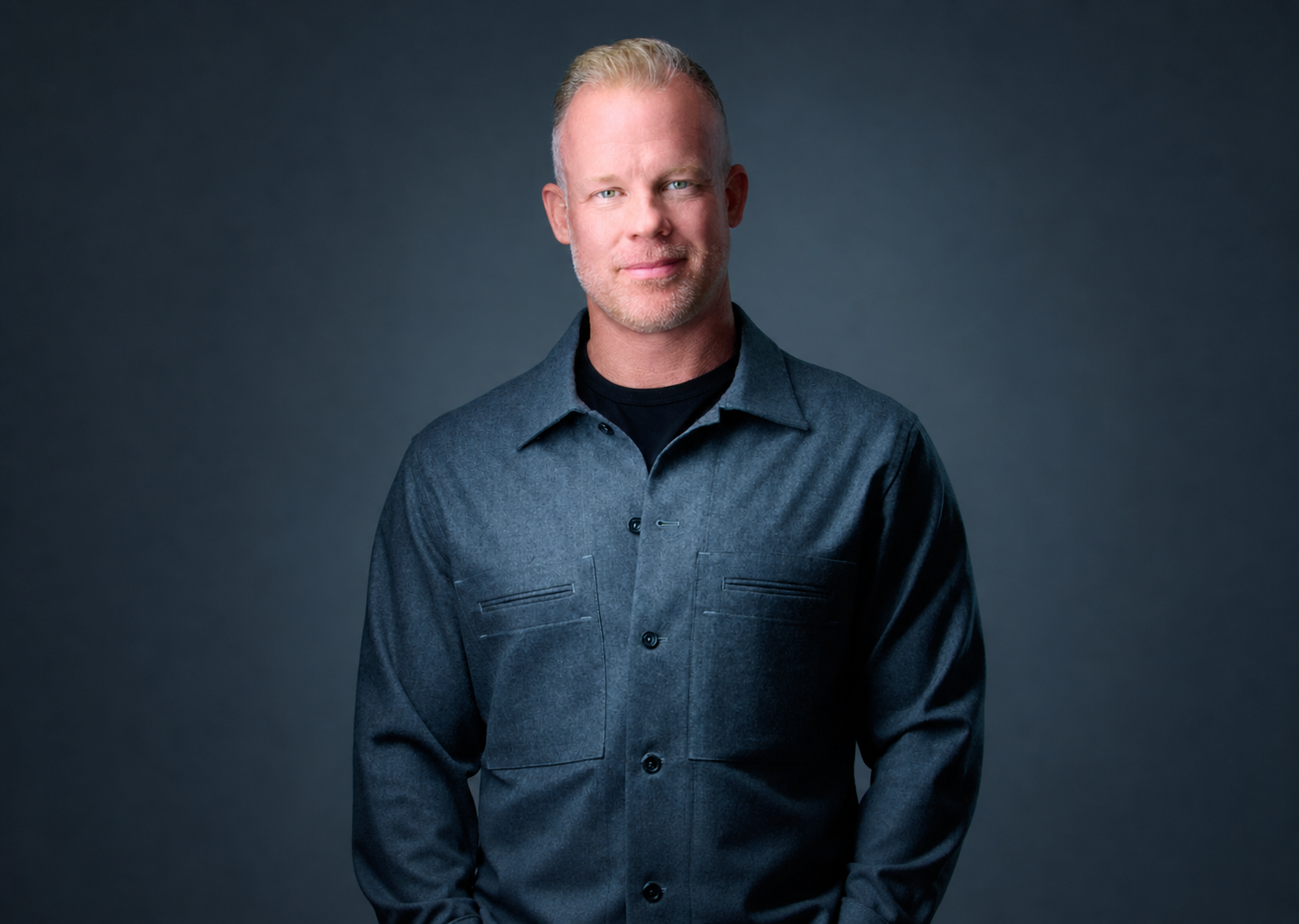
Luke Fischer saw a different future for this market. As the co-founder and CEO of SkyFi, he is helping turn Earth intelligence into something more practical, searchable, and usable for everyday business and government needs. Instead of treating satellite imagery as a closed-off tool for experts, SkyFi is building a platform where users can search for imagery, order new captures, compare providers, and use geospatial data with far less friction.
That is the larger story behind SkyFi. It is not only about selling satellite images. It is about making Earth observation data easier to reach, easier to understand, and easier to apply in real-world decisions. Under Luke Fischer’s leadership, SkyFi is becoming part of a wider shift in the space industry, where data from above the Earth is moving into the hands of more people on the ground.
Who is Luke Fischer
Luke Fischer is best known as the co-founder and CEO of SkyFi, but his career did not begin in the satellite imagery market. His background includes military aviation, advanced mobility, venture-backed technology, and national security-focused innovation. That mix gives him a useful perspective on how complex systems work and how they can be made simpler for people who need fast, reliable information.
Before building SkyFi, Fischer served as a U.S. Army Special Operations aviator. That kind of experience brings a direct understanding of how important location, visibility, timing, and intelligence can be in real operations. When decisions depend on what is happening on the ground, the ability to see clearly from above is not just interesting technology. It can shape strategy, safety, logistics, and response.
His later work connected him with fast-moving technology areas such as autonomy, advanced aviation, Uber Elevate, Joby Aviation, venture investing, space technology, artificial intelligence, and defense innovation. These fields all share one thing: they take complicated systems and try to make them useful at scale.
That same thinking shows up in SkyFi. Fischer’s work is not focused on making satellite data impressive for experts only. It is focused on making it usable for more people, more teams, and more industries.
The problem Luke Fischer saw in satellite imagery
The satellite imagery industry has always had enormous value, but access has often been difficult. A company might know that satellite imagery could help with a project, but still struggle to get started. Which satellite provider should they use? How much will the image cost? Is there an archive image already available? Can a new image be captured? What resolution is needed? What license terms apply? How long will delivery take?
For many teams, those questions created too much friction.
Traditional satellite imagery procurement could involve separate provider relationships, complex contracts, long sales cycles, and technical language that made the process feel out of reach. This kept many potential users away from Earth observation data, even when the data could have helped them make better decisions.
Luke Fischer and the SkyFi team saw an opportunity to modernize that experience. Instead of forcing users to navigate the old system, SkyFi aims to put access into one platform. The idea is simple: make satellite imagery feel less like a specialist procurement process and more like a modern digital product.
That is where SkyFi’s success story begins. It takes something that was once difficult to buy and makes it easier to search, understand, and use.
How SkyFi makes Earth intelligence easier to use
SkyFi is a self-service Earth intelligence platform. It helps users access satellite imagery and geospatial data through a single interface, rather than contacting multiple providers separately.
Through the platform, users can search for existing images, request new satellite captures, compare available options, and use data for different types of analysis. This is important because not every user needs the same kind of imagery. Some may need high-resolution optical imagery. Others may need synthetic aperture radar, hyperspectral imagery, aerial imagery, or other forms of remote sensing data.
SkyFi brings many of these options into one place. That matters because the Earth observation market is not built around one satellite or one type of image. It is a network of providers, sensors, satellites, datasets, and analytics tools. SkyFi’s role is to make that network easier for customers to use.
For a business user, the value is speed and simplicity. For a government user, it can mean faster access to intelligence. For an analyst, it can mean less time spent searching for data and more time spent understanding what the data shows.
In that sense, SkyFi is not just giving people access to images. It is helping them move closer to answers.
Why SkyFi is more than a satellite image marketplace
It is easy to describe SkyFi as a satellite imagery marketplace, but that only tells part of the story. A marketplace helps buyers and sellers meet. SkyFi does more than that by creating a cleaner access layer for geospatial intelligence.
Users can look for archive imagery, request new captures, explore provider options, and work with different types of Earth observation data. That makes the platform useful for customers who do not want to become experts in every satellite provider, sensor type, or ordering process.
SkyFi is not a satellite operator in the traditional sense. It does not need to own every satellite to create value. Its value comes from connecting users with a broad network of imagery and data providers, then making that access easier through software.
That is an important difference. The future of Earth intelligence will not only depend on launching more satellites. It will also depend on making the data from those satellites easier to discover, purchase, analyze, and act on.
Luke Fischer’s approach with SkyFi fits that future. He is building the front door for a market that has often felt hard to enter.
Luke Fischer’s mission to democratize Earth intelligence
The phrase “democratize access” can sometimes sound overused, but in SkyFi’s case, it points to a real problem. Satellite imagery has existed for decades, yet many people who could benefit from it have not had an easy way to use it.
Luke Fischer is working to change that by making Earth intelligence more available outside its traditional circles. The goal is not to turn every user into a remote sensing expert. The goal is to let more users benefit from the information that remote sensing can provide.
A farmer may want to monitor land conditions. An insurance team may need to assess damage after a storm. A supply chain team may want to understand activity at a port. An energy company may need to monitor infrastructure. A defense team may need current imagery for planning. A financial analyst may look for signals in physical-world activity.
All of these use cases depend on the same basic idea: what happens on Earth can often be better understood from above.
SkyFi gives more people a way to work with that perspective. Fischer’s achievement is not only building a company in the space sector. It is helping make space-based data feel useful for people who may never have thought of themselves as satellite imagery users.
The role of AI and analytics in SkyFi’s growth
Satellite imagery becomes much more powerful when it is paired with AI analytics and geospatial tools. A raw image can show what a place looks like, but analysis can help explain what is changing, what matters, and what action may be needed.
This is where SkyFi’s role can grow beyond access. The platform can help users move from viewing imagery to understanding it. That may include object detection, infrastructure monitoring, crop analysis, stockpile measurement, disaster assessment, vessel tracking, land-use monitoring, and other practical applications.
For many users, the challenge is not only getting the image. It is knowing what the image means.
AI can help reduce that gap. Instead of asking a user to manually inspect every detail, analytics can highlight patterns, measure changes, identify objects, and support faster decisions. This is especially useful for teams that need repeat monitoring over time, such as insurance companies, energy operators, environmental groups, mining companies, and government agencies.
Luke Fischer’s vision for SkyFi fits naturally into this direction. As Earth observation data becomes more available, the next challenge is turning that data into actionable insight. The companies that solve both access and interpretation will have a stronger role in the future of geospatial intelligence.
SkyFi’s funding and what it says about market demand
SkyFi’s growth has attracted investor attention because the demand for easier Earth intelligence is rising. Businesses and governments are no longer looking at satellite imagery as a niche tool. They are starting to see it as part of modern decision-making.
The company’s Series A funding helped show that momentum. Investment in SkyFi points to a broader belief that satellite imagery and geospatial data are becoming more useful across commercial and public-sector markets. It also shows confidence in platforms that can simplify access instead of adding more complexity.
Funding can support several parts of SkyFi’s growth. That includes improving the platform, expanding analytical tools, building new satellite operator partnerships, and making the customer experience smoother. For a company like SkyFi, every new provider relationship and every product improvement can make the platform more valuable to users.
This matters because the Earth observation industry is growing quickly, but growth alone does not guarantee usability. More satellites mean more data. More data creates more choices. More choices can create confusion if customers do not have a clean way to navigate them.
SkyFi is positioned to solve that problem by helping users find the right data for the right job.
How SkyFi helps different industries make better decisions
One reason SkyFi’s work matters is that satellite imagery can support many industries. The same platform can help different users answer very different questions.
In agriculture, Earth observation can help with crop monitoring, soil conditions, irrigation planning, vegetation health, and land analysis. Farmers, agribusinesses, and analysts can use satellite data to understand what is happening across large areas without always needing people on the ground.
In energy, imagery can support infrastructure monitoring, pipeline awareness, utility planning, renewable energy site analysis, and asset inspection. Energy companies often manage wide physical networks, so overhead visibility can be valuable.
In insurance, satellite imagery can help with property risk, disaster response, flood assessment, wildfire damage, storm impact, and claims verification. When events happen quickly, the ability to see affected areas from above can save time.
In finance, satellite data can work as alternative data. Analysts may study activity at ports, mines, warehouses, farms, shipping routes, or industrial sites to better understand market movements and economic activity.
In defense and government, geospatial intelligence supports monitoring, mission planning, border awareness, disaster response, national security, and infrastructure assessment. Fischer’s own background gives him a clear understanding of why speed and reliability matter in these environments.
In environmental services, Earth observation can help monitor deforestation, land-use changes, coastal erosion, water stress, climate risk, and recovery after natural disasters.
These examples show why SkyFi’s platform has a wide market. It is not built for one narrow use case. It is built around the bigger need for better visibility of the physical world.
Why Luke Fischer’s leadership stands out
Luke Fischer’s leadership stands out because his career connects several worlds that are now coming together: defense, aviation, autonomy, venture-backed software, artificial intelligence, and space.
That combination matters. Earth intelligence is not only a space problem. It is also a software problem, a data problem, a user experience problem, and a decision-making problem. Building a company in this market requires more than technical interest in satellites. It requires understanding how real users make decisions under pressure.
Fischer’s background in military aviation likely shaped his view of information as something that must be timely, clear, and useful. His experience around advanced mobility and technology companies likely shaped his focus on making complex systems easier to adopt. His work in venture-backed environments likely helped him understand how to build for scale.
SkyFi reflects that mix. The company is not presenting satellite imagery as something reserved for specialists. It is packaging access, provider choice, and analytics in a way that can support a much broader audience.
That is the achievement behind Luke Fischer’s story. He is not only participating in the Earth observation market. He is helping reshape how people enter it.
What SkyFi’s rise means for the future of Earth intelligence
The future of Earth intelligence will likely be shaped by two major forces: better data from space and better tools on Earth. Satellites will keep improving. Sensors will become more capable. AI models will become better at finding meaning in imagery. But the most important shift may be access.
If satellite imagery remains difficult to buy and understand, its impact stays limited. If platforms like SkyFi make it easier to use, the market can reach far more people.
This is why Luke Fischer’s work with SkyFi matters. He is building at the point where space data meets everyday decision-making. The platform helps bring satellite imagery out of a closed, expert-heavy process and into a cleaner software experience.
For businesses, that could mean faster planning and better risk awareness. For governments, it could mean stronger intelligence and response capabilities. For environmental teams, it could mean clearer monitoring of land, water, and climate-related changes. For industries that depend on physical-world activity, it could mean a better way to see what is happening before making decisions.
SkyFi’s rise shows that Earth intelligence is no longer only about who has access to satellites. It is about who can make satellite data useful. Under Luke Fischer’s leadership, SkyFi is helping open that door.