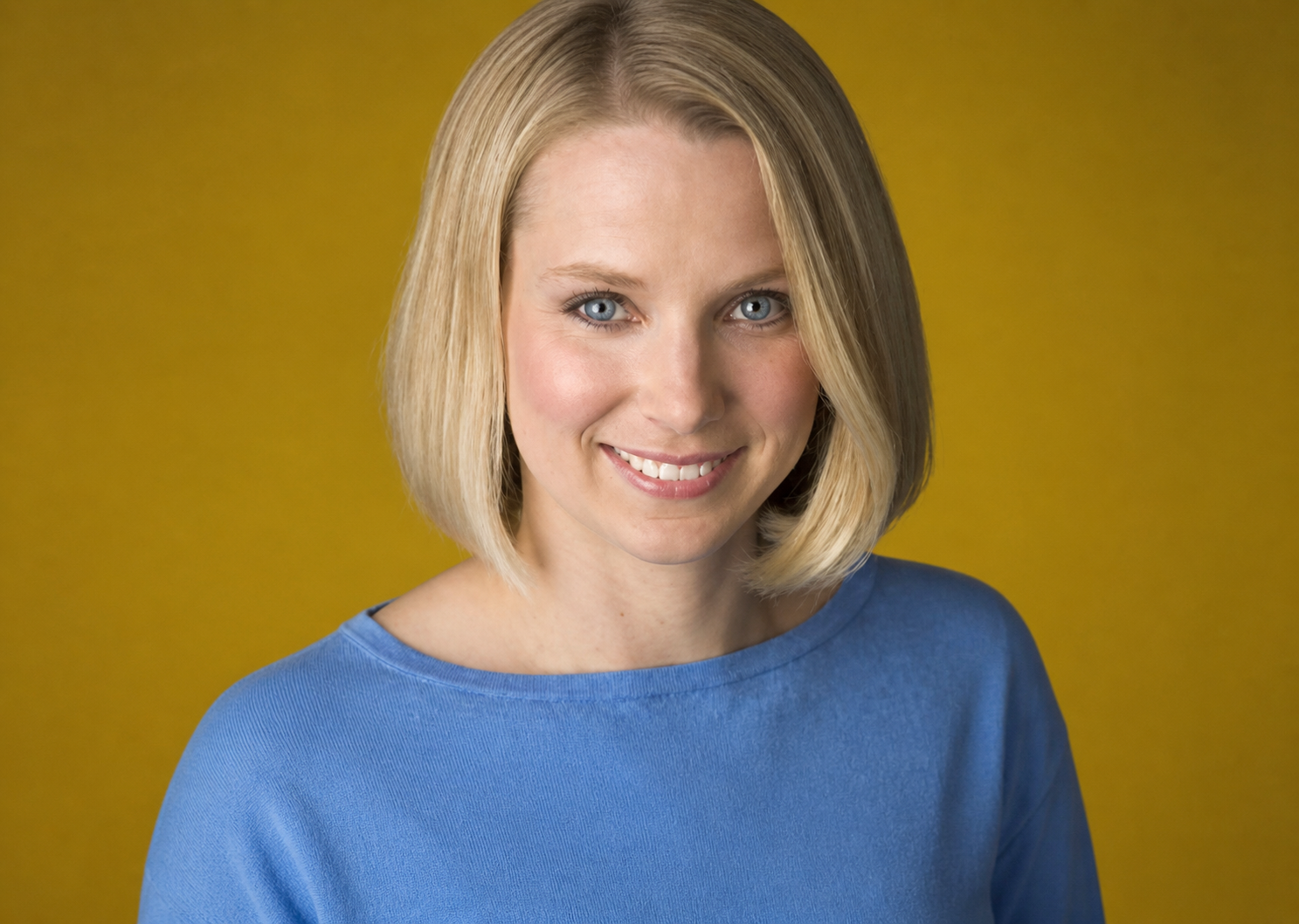
Marissa Mayer has spent much of her career working on technology that hides complexity behind simple, useful products. At Google, she helped shape the clean search experience that became part of daily internet life. At Yahoo, she stepped into one of the most difficult turnaround jobs in consumer tech. Later, through Sunshine AI, she kept working on a familiar problem: how to make digital life feel less scattered and easier to manage.
Now, with Dazzle AI, Mayer is entering one of the most crowded and important areas in technology. The company is still in its early stage, and its exact product has not been fully revealed. But the direction is clear enough to make it interesting. Dazzle is focused on consumer AI, with a mission built around making artificial intelligence more approachable, more useful, and more natural in everyday life.
That makes this chapter different from a standard founder comeback story. Marissa Mayer is not starting from scratch. She is bringing decades of product lessons from search, mobile, contacts, photos, design, and consumer behavior into a new race where the winners may not be the companies with the biggest models, but the ones that make AI feel genuinely useful for normal people.
Who is Marissa Mayer
Marissa Mayer is one of the best-known product leaders from the early Google era. She studied symbolic systems and computer science at Stanford University, with a background connected to artificial intelligence long before AI became the center of every tech conversation.
She joined Google in 1999 as one of the company’s earliest employees and became its first female engineer. Her work quickly moved beyond coding. Mayer became closely associated with product design, user experience, and the look and feel of some of Google’s most important consumer products.
Her career is often linked to one simple idea: powerful technology should not feel heavy to the person using it. That idea runs through the clean Google Search homepage, the growth of tools like Gmail and Google Maps, and now the ambition behind Dazzle AI.
Mayer’s story is also unusual because she has worked at nearly every level of consumer technology. She has built products, managed teams, led public companies, invested in startups, and served on major corporate boards. That range gives her a wider view of what makes technology succeed or fail once it reaches real users.
How Marissa Mayer helped shape Google’s product culture
When people talk about Marissa Mayer at Google, they often focus on her role in making the company’s products feel simple, fast, and useful. Google became famous for a search page that was almost shockingly plain compared with the crowded portals of the early internet. That was not just a design choice. It was a product philosophy.
A simple interface told users that the product had one job and could do it well. Search had to be quick. Results had to feel relevant. The page could not make people work harder than necessary. These ideas may sound obvious now, but they helped separate Google Search from the rest of the web at the time.
Mayer also worked across products that became everyday habits for millions of people. Google Maps changed how people moved through the world. Gmail changed expectations around email storage, search, and usability. Google News showed how information could be organized at scale. Even Google AdWords tied product thinking to a business model that made search commercially powerful without destroying the user experience.
This background matters for Dazzle because consumer AI has a similar challenge. The technology can be powerful, but power alone does not create a habit. People need to understand what it does, when to use it, and why it is worth trusting. Mayer’s career has been built around turning technical systems into products people can use without needing to understand the machinery behind them.
What the Yahoo years taught Marissa Mayer about scale and reinvention
In 2012, Marissa Mayer became CEO of Yahoo, taking on one of the most visible leadership roles in Silicon Valley. Yahoo was still a famous internet brand, but it was no longer setting the pace of the consumer web. The company was dealing with pressure from mobile, social platforms, search competition, advertising shifts, and years of strategic confusion.
Mayer’s job was not easy. She had to modernize a legacy internet company while the entire market was moving quickly. Her time at Yahoo included efforts to improve mobile products, redesign user experiences, strengthen advertising, and bring new energy to the company’s culture.
The Yahoo chapter is often debated, but it clearly gave Mayer experience that most startup founders do not have. She saw what happens when consumer habits shift faster than a large company can adapt. She also saw how hard it is to rebuild trust, refresh old products, and compete in markets where users have already moved on.
Those lessons are important for Dazzle AI. Personal AI will not win just because it sounds futuristic. It has to fit into real routines. It has to earn attention in a world where people already use phones, browsers, search engines, email apps, calendars, messaging tools, and built-in assistants. Mayer has seen both the value of strong consumer habits and the difficulty of changing them.
How Sunshine led to the launch of Dazzle AI
After Yahoo, Mayer co-founded Lumi Labs, which later became Sunshine AI. The company focused on consumer tools for managing personal information, starting with contacts and later moving into photo sharing and event-related features.
The bigger idea behind Sunshine was easy to understand. People have messy digital lives. Contacts are duplicated or outdated. Photos are scattered. Events are planned across messages, calendars, albums, and apps. Sunshine tried to use intelligent software to organize some of that everyday clutter.
The company did not become a breakout consumer hit, but it is still important in the Dazzle story. It showed where Mayer’s attention had gone after Yahoo. She was not chasing enterprise software or infrastructure. She was still interested in personal technology, the small daily problems people face, and the possibility that AI could quietly make those problems easier.
In 2025, Sunshine AI was folded into Mayer’s new company, Dazzle AI. Public reports described the move as a transfer of Sunshine’s assets into Dazzle, with the new company expected to carry forward the broader consumer AI ambition. That makes Dazzle less like a sudden pivot and more like a sharper version of a problem Mayer has been studying for years.
What Dazzle AI is building in the personal AI space
Dazzle AI is still a young company, so it is important not to overstate what is publicly known. The company describes itself as focused on making AI simpler, smarter, and more useful for everyday people. Public reporting has also connected Dazzle to the idea of a new kind of AI personal assistant.
That phrase can mean many things. It might involve helping users organize information, manage tasks, search across personal data, plan events, handle scheduling, or get more value from digital tools they already use. It could also mean building an AI layer that feels less like a chatbot and more like a practical companion for daily workflows.
The opportunity is clear. Many people have tried AI tools, but not everyone has turned them into a lasting habit. Some users open a chatbot when they need to write, brainstorm, summarize, or ask a question. But the bigger consumer opportunity is more personal. It is about AI that understands context, remembers useful details, helps with repeated tasks, and reduces the friction of modern digital life.
That is where Marissa Mayer has a natural connection to the category. Her best-known work has often centered on helping people find, organize, and act on information. Dazzle appears to be aiming at a similar theme, only now the interface may be powered by modern AI models instead of traditional search boxes, menus, and app workflows.
Why personal AI could become the next major consumer technology shift
Personal AI is becoming a major opportunity because people are overwhelmed by information. The average person deals with emails, messages, calendars, photos, passwords, notes, subscriptions, documents, apps, and endless notifications. The tools are useful, but they often create their own mess.
A strong personal AI product could help with that mess in a way older software could not. It could understand natural language. It could connect information across different contexts. It could help users remember things, prepare for meetings, plan travel, organize photos, draft messages, or find details buried in old conversations.
The challenge is that personal AI has to feel safe and trustworthy. When a tool touches a person’s private life, the bar is higher. Users may enjoy AI for public information, but they become more careful when the product asks for access to contacts, calendars, photos, messages, or personal files.
That means Dazzle AI will need to solve two problems at once. It has to make AI feel useful, and it has to make users feel comfortable enough to invite it into their daily routines. This is not only a technical challenge. It is a product, design, privacy, and trust challenge.
Why Marissa Mayer’s product experience gives Dazzle an edge
The most interesting thing about Dazzle is not only that it is an AI startup. It is that Marissa Mayer is approaching AI from a consumer product background rather than a purely technical one.
Many AI companies lead with model performance, benchmarks, or infrastructure. Those things matter, but everyday users often care about something simpler. Does the product save time? Does it feel easy? Does it understand what I want? Does it make life less annoying? Does it work well enough that I come back tomorrow?
Mayer has spent years around these questions. At Google, she worked on products that had to serve massive audiences without feeling complicated. At Yahoo, she dealt with the difficulty of bringing old products into new user behaviors. At Sunshine, she worked directly on the personal organization problems that AI assistants are now trying to solve at a much larger level.
That combination could help Dazzle AI avoid one of the common traps in AI product design. A tool can be impressive in a demo but unclear in daily use. For consumer AI, the product has to move from novelty to habit. Mayer’s background gives Dazzle a better chance of thinking deeply about that shift.
Dazzle’s funding and investor confidence
Dazzle AI raised an $8 million seed round at a reported $35 million post-money valuation. The round was led by Kirsten Green of Forerunner Ventures, with participation from investors including Kleiner Perkins, Greycroft, Offline Ventures, Slow Ventures, Bling Capital, Amino Capital, and the Acquired Wisdom Fund.
The investor list matters because Forerunner Ventures is strongly associated with consumer behavior, commerce, and brands that understand how people adopt new products. That kind of backing suggests Dazzle is not being framed as a narrow technical experiment. It is being positioned as a consumer company with the potential to make AI part of normal life.
The funding also gives Dazzle room to build before it has to fully explain itself to the market. That matters because consumer AI products can take time to get right. The interface, onboarding, trust model, and first-use experience may be just as important as the underlying AI.
What Dazzle must get right to win everyday users
The personal AI market is already crowded. ChatGPT, Google Gemini, Microsoft Copilot, Apple Intelligence, Perplexity, and many smaller AI assistant startups are all trying to become part of how people work, search, write, plan, and make decisions.
For Dazzle AI, the challenge is not simply to build something smart. It has to build something distinct. If users already have AI inside their phone, browser, email, operating system, and search engine, Dazzle needs a clear reason to exist outside those defaults.
The company will likely need to win on product experience. That could mean a cleaner interface, a more personal workflow, stronger context, better privacy choices, or a more delightful way to get things done. It could also mean focusing on a specific everyday pain point before expanding into a broader assistant.
The best consumer products usually do not begin by asking people to change everything. They solve one problem so well that users naturally trust them with more. If Dazzle can find that first sharp use case, it may have a better chance of becoming part of daily behavior.
How Dazzle fits into Marissa Mayer’s larger career story
Marissa Mayer’s career has always been tied to the relationship between people and information. At Google, she helped make web information easier to search and use. At Yahoo, she tried to modernize a company built around internet content, communication, and media. At Sunshine, she worked on personal data, contacts, photos, and events.
Dazzle AI fits that same pattern. The tools have changed, but the core question is familiar: how can software help people deal with complexity without making them feel overwhelmed?
That is why Dazzle is worth watching. It is not just another AI company joining the rush. It is a test of whether a founder with deep consumer product experience can turn modern AI into something that feels simple, useful, and human enough for everyday users.
Mayer’s biggest advantage may be that she understands the difference between technology people admire and technology people actually use. In the personal AI space, that difference could decide which products fade after the first wave of curiosity and which ones become part of daily life.