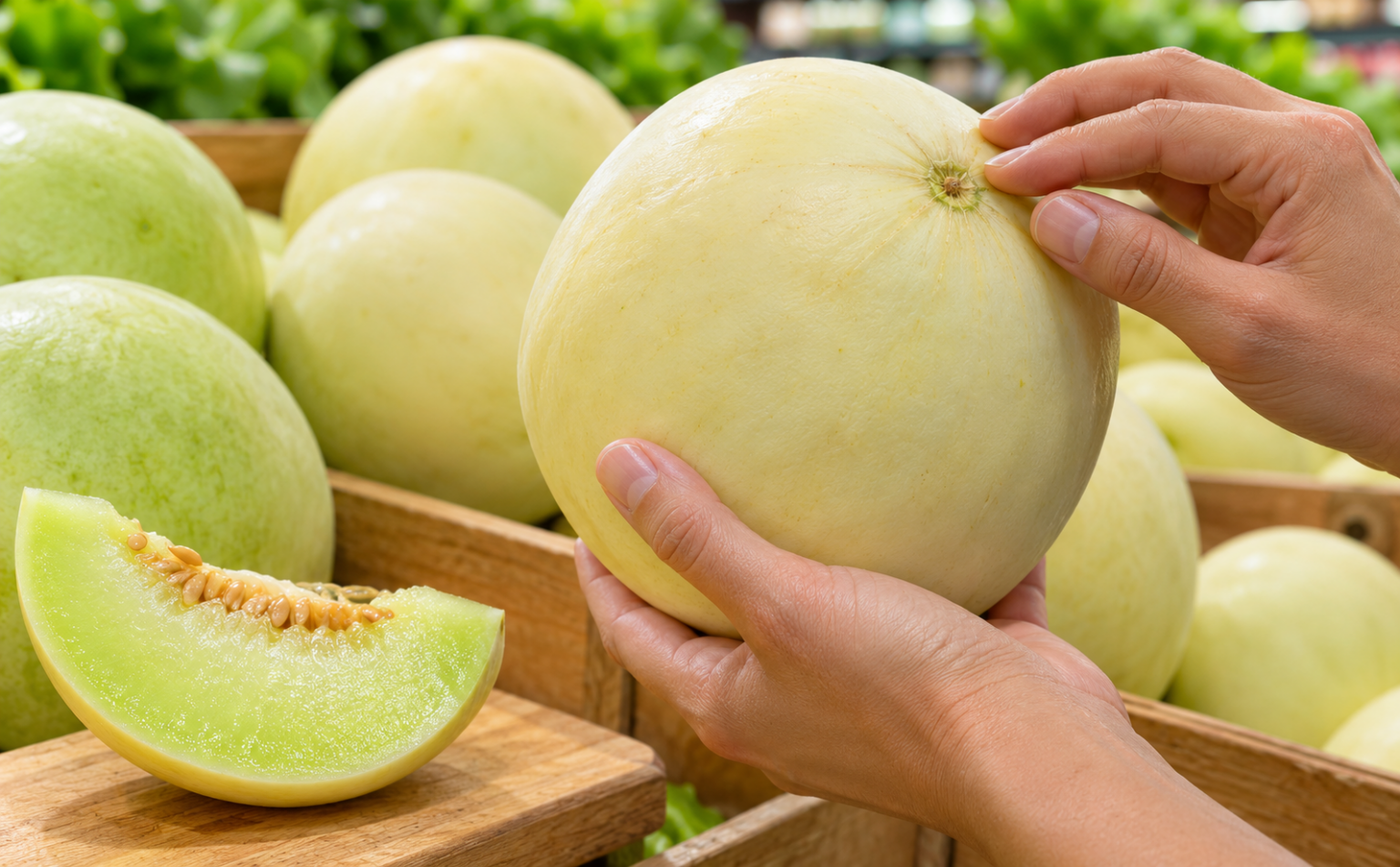
Pick a honeydew that is creamy yellow or pale gold, not green. It should feel heavy for its size, have a smooth, slightly waxy or tacky rind, and give a little when you press the blossom end (the end opposite the stem). Skip melons that are green-tinted, rock-hard, mushy, cracked, leaking or moldy.
Honeydew is harder to judge than cantaloupe. It has very little aroma, and it doesn’t come off the vine with the clean “slip” stem cantaloupe does. So no single test settles it. Use several checks together, and give the most weight to the first four below.
- Color: creamy yellow to pale gold, with no green cast
- Rind feel: smooth and waxy, sometimes slightly sticky, not fuzzy or slick
- Weight: the heaviest of several melons the same size
- Blossom end: slight give, not rock-hard, not soft and wet
- Smell (bonus): a faint sweet scent is good, but no scent doesn’t mean it’s bad
What you need before you shop
You don’t need tools, just your hands, your eyes and a minute to compare several melons in the bin. Before you start picking, settle two things.
Know which honeydew you’re looking at
- Standard green-flesh honeydew: the common one. When ripe, the rind is creamy white to yellow and the flesh is pale green.
- Golden honeydew: has a bright golden-yellow rind even when it’s only just ripe. Its color tells you less, so rely more on weight and the blossom end.
- Orange-flesh honeydew: looks like a standard honeydew from the outside but has salmon-orange flesh that tastes partly like cantaloupe. Choose it the same way you would a green-flesh one.
Decide when you’ll eat it
If you’re eating it today, pick a melon with clear give at the blossom end and a slightly sticky rind. If you’re eating it in two or three days, pick one that is fully creamy-yellow but still firm, and let it soften on the counter.
A note on season (and Florida shelves)
U.S.-grown honeydew is at its best from roughly June through October. Most of it comes from California and Arizona. The rest of the year, stores stock imports from Mexico and Central America. Florida grows a lot of watermelon but very little honeydew, so what you see at Publix or Winn-Dixie has usually traveled a long way. That makes the in-store checks below more important, not less.
Step-by-step: how to pick a good honeydew at the grocery store
Step 1: Check the color
Look for a creamy yellow or pale gold rind. A green or greenish-white tint means the melon was picked early, and it will stay bland. A paler patch where the melon sat on the ground is normal, as long as that patch is creamy and not green.
Step 2: Feel the surface
Run your palm over the rind. An underripe honeydew feels smooth but almost fuzzy or dry, like matte plastic. A ripe one feels waxy, and a very ripe one can feel a little tacky because sugar is starting to reach the surface. Fine tan netting or light freckling is often a good sign. Pass on bruises, cracks, sunken areas or any wet spots.
Step 3: Compare weight
Pick up two or three melons about the same size, one after another. The heaviest one usually has the most water and the juiciest flesh. Most honeydews weigh about 4 to 8 pounds, but what matters is weight compared with size, not size alone. A big melon that feels light is often dry or mealy inside.
Step 4: Press the blossom end
Find the end opposite the stem scar and press it gently with your thumb. You’re looking for a slight springiness, like the give in a ripe avocado but firmer. If it doesn’t give at all, the melon is underripe. If your thumb sinks in or the spot feels wet, it’s overripe or starting to rot. Of all the checks, this one varies most from melon to melon, so compare several.
Step 5: Smell the stem end (optional)
A light, sweet, floral smell at the stem end is a good bonus sign. But many perfectly good honeydews smell like almost nothing, especially straight from the cold display. Don’t reject a melon just because it has no smell. Do reject one that smells sour, fermented or like nail polish remover.
Optional: The tap test
Some people knock on the melon and listen for a slightly hollow, deep sound. It’s a weak signal for honeydew, since the thick rind dulls the sound and most people can’t tell the difference reliably. Use it only to break a tie.
Which checks to trust most
| Check | Reliability | What “good” looks like |
|---|---|---|
| Rind color | High | Creamy yellow or pale gold, no green |
| Rind texture | High | Waxy to slightly tacky |
| Weight for size | High | Heaviest of similar-sized melons |
| Blossom end | Medium-high | Slight give, not mushy |
| Smell | Low-medium | Faint sweetness, never sour |
| Tap sound | Low | Slightly hollow |
Buying pre-cut honeydew
With pre-cut melon, you can see the flesh before you buy, and that’s an advantage. Look for evenly colored, translucent flesh with no white, dry-looking patches. The container should have only a little liquid. A lot of juice pooled in the bottom means the fruit is breaking down. Check the packed-on or sell-by date, and take the freshest container from the back of the case.
Does honeydew ripen after you buy it? Storage, timing and cost
Here’s a clear answer, since many pages contradict each other: a honeydew will soften and get juicier on your counter, but it won’t get meaningfully sweeter. Melons don’t store starch that can turn into sugar after harvest, so the sweetness is mostly set when the melon is picked. That’s why choosing well at the store matters so much.
Timeline for a melon that’s slightly firm
- Leave it whole at room temperature, out of direct sun.
- Press the blossom end once a day. Most melons reach a good texture in 1 to 3 days.
- Once it gives slightly, refrigerate it whole. It will hold for about 5 days to a week.
A melon that was green when you bought it will soften, but it will still taste flat. Turn it into smoothies, salsa or a salad with lime and salt, where other ingredients can carry the flavor.
Cutting and storing safely
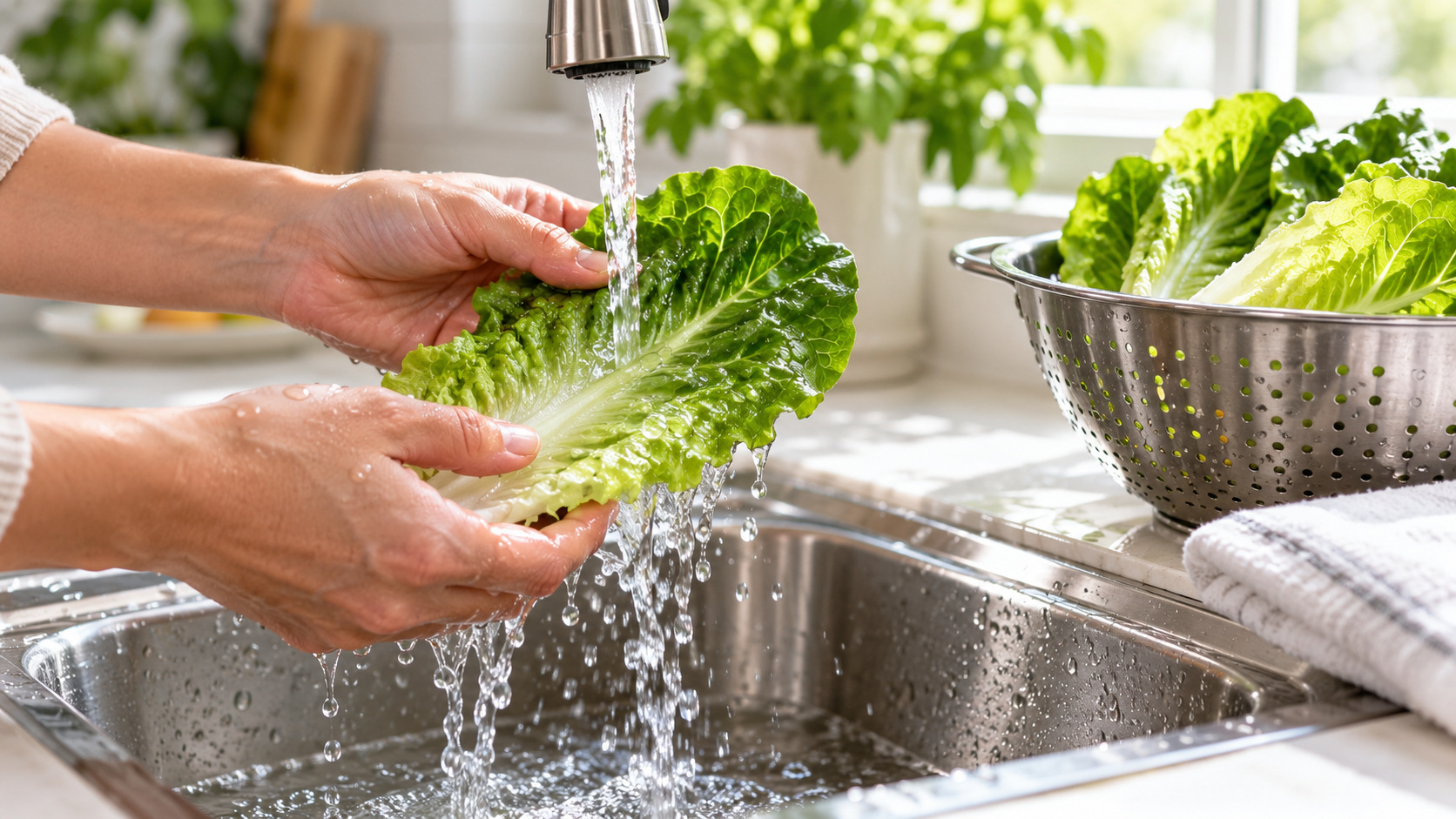
- Wash the rind first. Scrub it under running water with a clean produce brush, no soap, then dry it. Your knife drags whatever is on the rind straight through the flesh.
- Refrigerate cut melon in a covered container and eat it within 3 to 4 days.
- Don’t leave cut melon out for more than 2 hours, or 1 hour when it’s above 90°F.
Florida note: heat shortens the timeline
In a Florida summer, a melon left in a closed car for an hour of errands can overheat and start to break down. Make the grocery store your last stop. On a sunny kitchen counter, expect a slightly firm melon to ripen in about a day rather than three, and check it sooner. If you’re packing cut honeydew for the beach or a ballgame, keep it on ice.
Cost: whole vs. pre-cut
Prices change by season and store, so we won’t quote a number. The pattern is consistent, though. Whole honeydews are cheapest per pound during the summer domestic season and often go on sale around holiday weekends. Pre-cut honeydew usually costs several times more per pound of fruit you actually eat. Pre-cut is worth it when you need only a cup or two, or when you want to see the flesh before paying. For a family or a party, buy whole. Rind and seeds account for a big share of a whole melon’s weight, but it’s still the better value.
Common mistakes when choosing honeydew
- Trusting the tap or smell test alone. These are the two weakest checks for honeydew.
- Buying green and hoping it sweetens. It will soften, but it won’t get sweeter.
- Choosing by size instead of weight. The biggest melon in the bin isn’t necessarily the best one.
- Overlooking damage. Cracks, leaks and soft spots let bacteria in and lead to quick spoilage.
- Applying cantaloupe rules. Honeydew doesn’t have a reliable slip stem or a strong smell. Don’t expect either.
- Cutting without washing the rind, or leaving cut melon on the counter during a long cookout.
Related reading
If you’re also eating out, here’s what MKT means on a menu and when to ask about the price. Ordering in instead? See whether you can use restaurant gift cards on DoorDash. And if you’re planning a holiday spread, our Thanksgiving 2026 guide for Florida covers dates, store closures and shopping tips.
FAQs
How do you pick a good honeydew at the grocery store?
Compare several melons. Choose one that is creamy yellow with no green tint, has a waxy or slightly tacky rind, feels heaviest for its size, and gives slightly when you press the blossom end. Skip any with cracks, soft spots or leaking.
Should a honeydew be soft or hard?
Neither. The body should be firm, with slight give at the blossom end. If it’s rock-hard all over, it’s underripe. If it’s mushy or wet anywhere, it’s overripe or spoiling.
Does honeydew ripen after it’s picked?
It softens and gets juicier at room temperature over 1 to 3 days, but it won’t get noticeably sweeter. Melons don’t store starch that turns into sugar after harvest, so buy one that is already creamy yellow.
How do you pick a golden honeydew?
Golden honeydew has a yellow rind even when it’s only barely ripe, so color tells you less. Focus on weight for size, a waxy rind and slight give at the blossom end, and avoid any with dull, green-tinged patches.
How long does honeydew last?
A ripe whole honeydew keeps about 5 days to a week in the refrigerator. Cut honeydew lasts 3 to 4 days covered and chilled. Don’t leave cut melon at room temperature for more than 2 hours, or 1 hour above 90°F.
How can you tell if honeydew has gone bad?
Throw it out if it smells sour or fermented, is leaking, has large soft or sunken spots, or shows mold. Also discard cut pieces that feel slimy or look glassy and broken down.