TAMPA, Fla. — Demand for lead paint inspections is climbing across Florida, as homebuyers, parents, and renovation contractors increasingly seek clear answers about older properties rather than relying on assumptions. The shift reflects a broader national trend toward proactive testing, driven largely by ongoing public health guidance from the Environmental Protection Agency (EPA) and the Centers for Disease Control and Prevention (CDC).
Why Lead Paint Remains a Relevant Concern
Lead-based paint was banned for residential use in 1978, but the ban didn’t remove existing paint from homes built before that year. According to the EPA, an estimated 31 million pre-1978 homes nationwide still contain lead-based paint, and millions of those homes have children under six living in them.
Lead paint itself isn’t typically found in one isolated spot. It can appear on interior walls, trim, doors, and ceilings, as well as exterior siding, porches, railings, and window components — essentially any painted surface that predates the ban, regardless of how many times it’s been repainted since.
According to the CDC, no safe blood lead level in children has been identified. That guidance, rather than any single dramatic finding, is a primary reason health officials continue to recommend testing rather than assuming a home is safe simply because it looks fine.
Who Is Most at Risk
Per CDC guidance, children under six are considered the most vulnerable population, largely due to behavioral and developmental factors. Young children spend more time on floors and are more likely to put hands, toys, and other objects in their mouths, increasing the chance of ingesting lead dust from deteriorating paint.
The CDC also notes that even low levels of lead exposure have been associated with learning difficulties and behavioral effects in children. Pregnant women are frequently included in testing guidance as well, since lead exposure during pregnancy is a documented concern according to federal health agencies.
Older homes with visible paint deterioration — chalking, peeling, chipping, or cracking — are generally considered higher-priority candidates for testing, though the EPA notes that paint condition alone cannot confirm whether lead is present.
Recognizing Potential Signs
Common physical indicators that may warrant testing include peeling or chipping paint, especially around windows, doors, and high-friction surfaces, as well as fine dust accumulating near painted components after routine cleaning. According to the EPA, deteriorating paint and the dust it generates are among the most common sources of lead exposure in residential settings.
It’s worth noting that these visual signs indicate aging paint, not confirmed lead content. The only way to confirm lead’s presence is through direct testing, not observation.
A Growing Factor in Real Estate Transactions
Lead testing is becoming a more standard part of due diligence during home purchases, particularly in markets with a significant share of older housing stock. Federal disclosure law already requires sellers of pre-1978 homes to disclose known lead-based paint hazards, but a growing number of buyers are now requesting independent testing rather than relying solely on seller disclosures.
This trend is especially visible in Florida cities with large inventories of early-to-mid-20th-century homes, including St. Petersburg and Tampa, where historic neighborhoods built well before 1978 remain popular with buyers drawn to their architecture and character.
Why Swab Tests Often Fall Short
A key factor behind the push toward professional testing is a growing understanding of the limitations of basic chemical swab kits, which are widely available at hardware stores. These kits react to lead through a simple color change, but they only interact with whatever paint layer is currently exposed on the surface.
That limitation matters considerably in older homes, which have frequently been repainted multiple times over several decades. A surface that has been painted over four or five times may show a negative result from a swab test, simply because the top layer doesn’t contain lead, even if lead-based paint exists several layers beneath it. Swab testing also provides only a rough yes-or-no indication, rather than a precise, documented reading.
XRF Testing: The Industry Standard
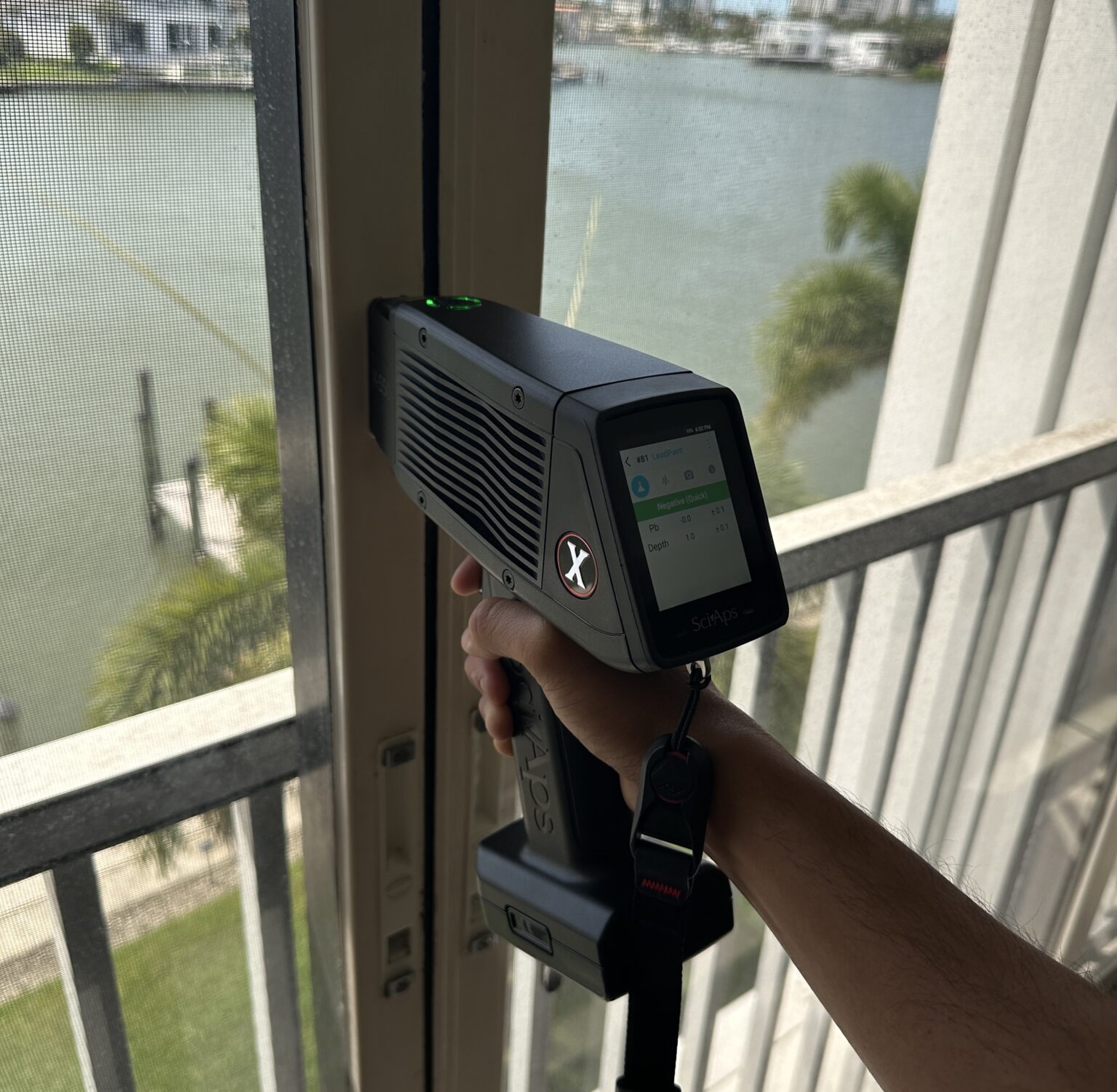
Licensed lead inspectors use a different method entirely: X-ray fluorescence, or XRF, technology. An XRF analyzer reads the full depth of a painted surface at once, detecting lead across every layer rather than just the outermost coat, and does so without damaging the surface being tested.
This distinction is a major reason the EPA requires XRF testing, performed by certified inspectors using approved equipment, for inspections tied to real estate transactions, renovation compliance, and federally assisted housing.
Equally important: lead content can vary significantly from surface to surface within the same home. A tested windowsill showing no lead does not mean every windowsill, door frame, or wall in that home is lead-free. Paint products, application dates, and repainting history often differ room to room, which is why a proper inspection involves testing each individual component throughout the home, rather than a handful of spot checks.
A Regional Leader in Lead Testing Services
Full Spectrum Environmental, with a location in Tampa and an additional location serving Palm Beach, has positioned itself among Florida’s leading providers of EPA-compliant lead inspection services. The company specializes in XRF-based testing for homebuyers, homeowners, landlords, and renovation contractors across Tampa Bay and South Florida, with particular experience in the older housing stock common throughout St. Petersburg, Tampa, and surrounding communities.
As demand for lead testing continues to rise statewide, Full Spectrum Environmental emphasizes thorough, component-by-component inspection practices designed to give clients a complete and accurate picture of their home — not just a partial answer based on a single surface or a single test.
For homeowners and buyers evaluating a property built before 1978, a certified lead inspection from Full Spectrum Environmental provides a documented, EPA-compliant assessment based on accurate testing methodology, rather than assumption or guesswork.